An approved sample and a bulk order are usually made by different hands, in different vessels, at different scales, and sometimes weeks apart. The drift between them is not mysterious: dosage rounding, maceration time, alcohol and water quality, and the way a bench blend is replicated all move the scent. An established beauty brand can close most of that gap before filling starts by agreeing what the bulk will be measured against, who owns the scale-up step, and which differences are acceptable. The brands that suffer most are not the ones with difficult formulas; they are the ones that approved a sample without ever writing down what it was.
Key takeaways
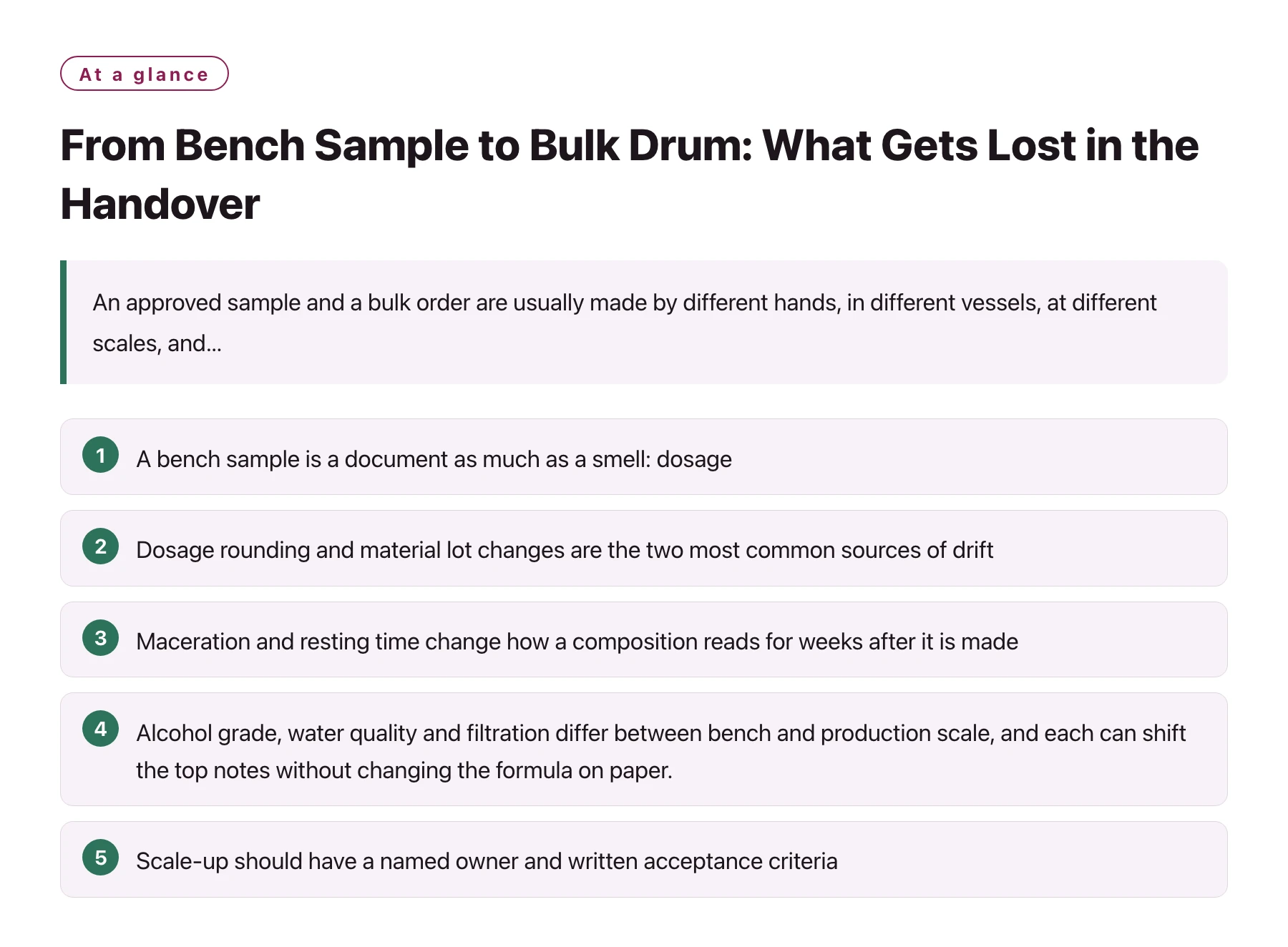
- A bench sample is a document as much as a smell: dosage, base, packaging and reference standard must be recorded at approval or the bulk batch has nothing to be measured against.
- Dosage rounding and material lot changes are the two most common sources of drift, and both are visible in the batch record before filling starts rather than after shipping. [1]
- Maceration and resting time change how a composition reads for weeks after it is made, so a bulk batch should be assessed on the same resting schedule as the sample it is being compared with.
- Alcohol grade, water quality and filtration differ between bench and production scale, and each can shift the top notes without changing the formula on paper.
- Scale-up should have a named owner and written acceptance criteria; without both, the first bulk is judged by whoever smells it loudest in the room.
- Retention samples from the bulk and from the approved sample, stored together, are what make any later comparison possible; without them a disagreement becomes a memory contest.
Most fragrance brands meet the sample-versus-bulk problem once and then build a process around it. The difficulty is that the first encounter usually happens after the packaging has been printed and the launch date has been announced, when the cheapest response is to accept the difference.
This is a handover problem rather than a perfumery problem. It is about what gets written down, when the bulk is compared, and who is allowed to declare that the comparison has passed.
Why the bench and the drum disagree
At the bench, a sample is often built by hand in small glass, weighed precisely, and judged within days. In production, the same formula is compounded in a stainless vessel, mixed at a different shear, filtered, and filled on a line that may run for hours. Each of those steps can move the scent, and none of them changes the formula as written. That is why comparing documents is not enough.
Material lots introduce a second variable. A natural material from a new lot can differ slightly from the previous one, and a synthetic can arrive at a slightly different purity. In a well-run factory those differences are checked against a retained reference; in a hurried one they are absorbed silently into the batch. [1]
The third variable is time. A freshly made composition often reads sharper and thinner than the same composition after several weeks of resting. If the sample was assessed at three weeks and the bulk at three days, the difference you smell may be entirely a calendrical one.
Where the handover drifts, and the control that addresses it
| Source of drift | How it shows up | Control to agree before filling |
|---|---|---|
| Dosage rounding | A slightly weaker or flatter opening | Batch record states the actual weighed dosage against the approved figure |
| Material lot change | A subtle shift in one accord, often the top notes | Retained reference per material and a documented comparison on receipt |
| Maceration and resting | Sharper, thinner or harsher profile in the first weeks | Same resting period before assessment for sample and bulk |
| Alcohol and water grade | Dryness or a faint off-note that grows with time | Fixed specification for base materials, stated in the batch record |
| Filtration and shear | Top notes reading differently from the bench sample | Process parameters recorded and repeated, not adjusted per batch |
| Filling environment | Contamination or oxidation risk on a long run | Line clearance and environmental checks logged during the run |
| Assessment timing | Two people judging two different moments | A written comparison protocol with a fixed inspection point |
The controls are unglamorous, and that is the point: each one converts a subjective disagreement into a documented check that either passes or fails.
What the brand should put in writing before bulk starts
Three documents do most of the work. The approved sample specification fixes dosage, base and reference. The scale-up plan names who runs the first bulk batch and which parameters must match the sample. The acceptance protocol states how the bulk will be compared, by whom, at what point in the resting schedule, and what happens if it fails to match.
The acceptance protocol is the one most often missing, and it is the cheapest to write. It does not need to be complicated: a single page listing the attributes to compare, the tolerances that matter, and the person authorised to sign the comparison off is enough to prevent the argument that usually follows a marginal batch. [2]
Ask for the first bulk fill-weight log and the retention sample plan at the same time you approve the sample, not after the pallet has left. It also helps to see how the company's official site describes its own production route from compounding to filling, because the published scope tells you which steps a factory expects to be asked about. A supplier that can talk through maceration and filling sequence without notes has done this handover many times. Where the factory offers one-stop fragrance manufacturing - compounding, filling and assembly under the same roof - the handover is shorter by design, because fewer parties can reinterpret the specification along the way.
A handover sequence that has worked for established brands
- Freeze the sample specificationRecord dosage, base, pack and reference standard in one signed page before any bulk material is ordered.
- Name the scale-up ownerOne person at the factory owns the first production batch and signs the comparison; it should not be a sales contact.
- Compare at the same resting pointAssess the bulk against the sample at the same interval after compounding, and record the date of both.
- Retain both samples togetherStore a bulk retention sample next to the approved sample so any later question has a physical reference.
- Review the first two batches, then relaxSupervision should reduce once the process repeats; if it does not, the acceptance protocol is doing too little work.
The related problem: a sample that changes on its own
Sometimes the bulk matches the formula exactly and the scent still reads differently from the sample, because the sample itself has aged since approval. This is why brands should keep the approved sample and re-smell it at the moment of comparison, rather than relying on a description written months earlier.
When a sample is stored badly, the comparison loses its baseline. Light, heat and a half-empty bottle all accelerate change, and a sample kept on a desk tells you very little after a summer. Storage conditions for the reference sample belong in the same written protocol as the acceptance criteria, and how Xuelei explains the aging effect is a useful cross-check on whether your own comparison is being run fairly.
Sources
- IFRA: Safe Use and Fragrance Science —— IFRA's explanation of how fragrance materials are scientifically assessed for safe use and how those conclusions are applied by the industry.
- Cosmetics & Toiletries —— A technical magazine for cosmetic formulators, covering ingredients, formulation science and testing methods.
Frequently asked questions
Why does my bulk order smell different from the approved sample?
The usual causes are dosage rounding, a different material lot, a shorter resting period, or a change in alcohol or water grade. Compare the batch record against the approved sample specification and check the dates of both assessments; in most cases the difference is procedural rather than a change to the formula.
How long should bulk rest before it is compared with the sample?
Use the same interval that was used for the sample, and write that interval into the acceptance protocol. If the sample was judged four weeks after compounding, the bulk should be compared four weeks after compounding, otherwise the comparison measures time rather than manufacture.
Who should sign off the sample-to-bulk transition?
A named technical owner at the factory, ideally the person responsible for the batch record, with countersignature from the brand's product or quality lead. A sales contact signing the comparison removes the technical accountability the process depends on.
Do we need retention samples for every batch?
At least for the first few batches and any batch produced after a material change or a line adjustment. Retention samples kept alongside the approved reference are what make a later investigation possible, and they cost very little compared with the value of being able to answer a customer complaint.
What should happen if the bulk does not match?
The acceptance protocol should say so in advance: who is notified, what is quarantined, whether the batch is reworked or rejected, and who bears the cost. Agreeing that sequence before filling starts turns a commercial argument into a contained technical process.